
Our school community
Wrenvale College
Belong · Learn · Flourish
Conditions for thriving
SO WHAT?
PROSPER: useful language, with limits
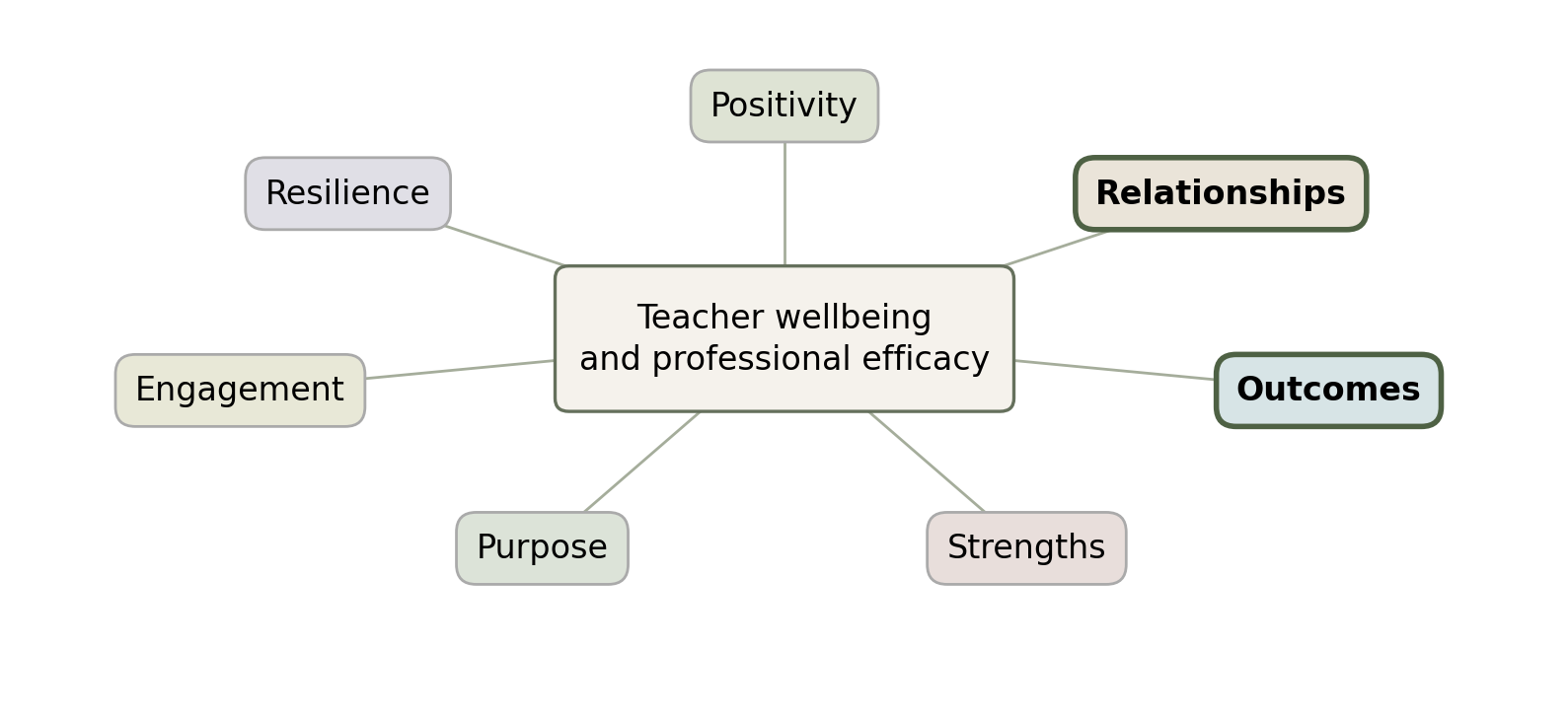
PROSPER brings together Positivity, Relationships, Outcomes, Strengths, Purpose, Engagement and Resilience. It gives the school a shared vocabulary for wellbeing (Noble & McGrath, 2015). Its original study gathered educators’ views of usefulness after workshops. Although PROSPER draws together evidence-informed approaches to student wellbeing (Yeung et al., 2018), direct evidence of its effectiveness with regards to teacher bullying remains limited.
A study of 76 Hong Kong preschool teachers found selective benefits from a PROSPER-based intervention, including positivity and resilience, at two-month follow-up (Datu et al., 2022). Similarly, this small, context-specific study does not establish effectiveness against bullying in Australian secondary schools.
PROSPER can be adapted for teachers by linking its seven elements to working conditions and opportunities for professional growth, including supportive collegial relationships, recognition of strengths and meaningful participation in school decisions (Noble & McGrath, 2015). To support teacher efficacy, its Outcomes and Strengths elements could guide achievable professional goals, constructive feedback and opportunities to learn from colleagues, helping teachers build confidence through successful practice (Bandura, 1977a). For whole-school wellbeing, the framework could guide shared action across staff, students and families, with leadership responsible for translating wellbeing priorities into safe and supportive practices.
Maslow: needs overlap
Maslow’s needs theory is a reflective lens, not a diagnostic scale (Maslow, 1943). Rest and breaks support physiological needs; predictable contact supports safety. Belonging links with Relationships, esteem with Strengths and Outcomes, and meaningful contribution with Purpose and Engagement. A teacher may retain purpose while feeling unsafe. Needs overlap, and nobody must reach a particular level before receiving protection.
Maslow’s hierarchy and PROSPER: conceptual links
Self-actualisation
Purpose, Engagement and Strengths
Using and developing strengths supports meaningful professional growth.
Work aligned with personal values and appropriate challenge can deepen engagement and fulfilment.
Esteem
Strengths and Outcomes
Recognising expertise supports competence and professional worth.
Meaningful achievements and constructive acknowledgement reinforce confidence.
Love and belonging
Relationships and Purpose
Supportive relationships foster inclusion, acceptance and connection.
Shared goals help teachers feel that their contribution matters.
Safety
Relationships and Resilience
Trustworthy relationships and predictable responses to bullying support a sense of protection.
Safe conditions support recovery. Resilience cannot compensate for an unsafe workplace.
Physiological needs
Positivity and Engagement
Sleep, nourishment and rest support emotional regulation and energy.
Meeting physical needs creates conditions for positive emotions and sustained engagement.
Adapted from Maslow (1943) and Noble & McGrath (2015).
Protect participation, not appearances
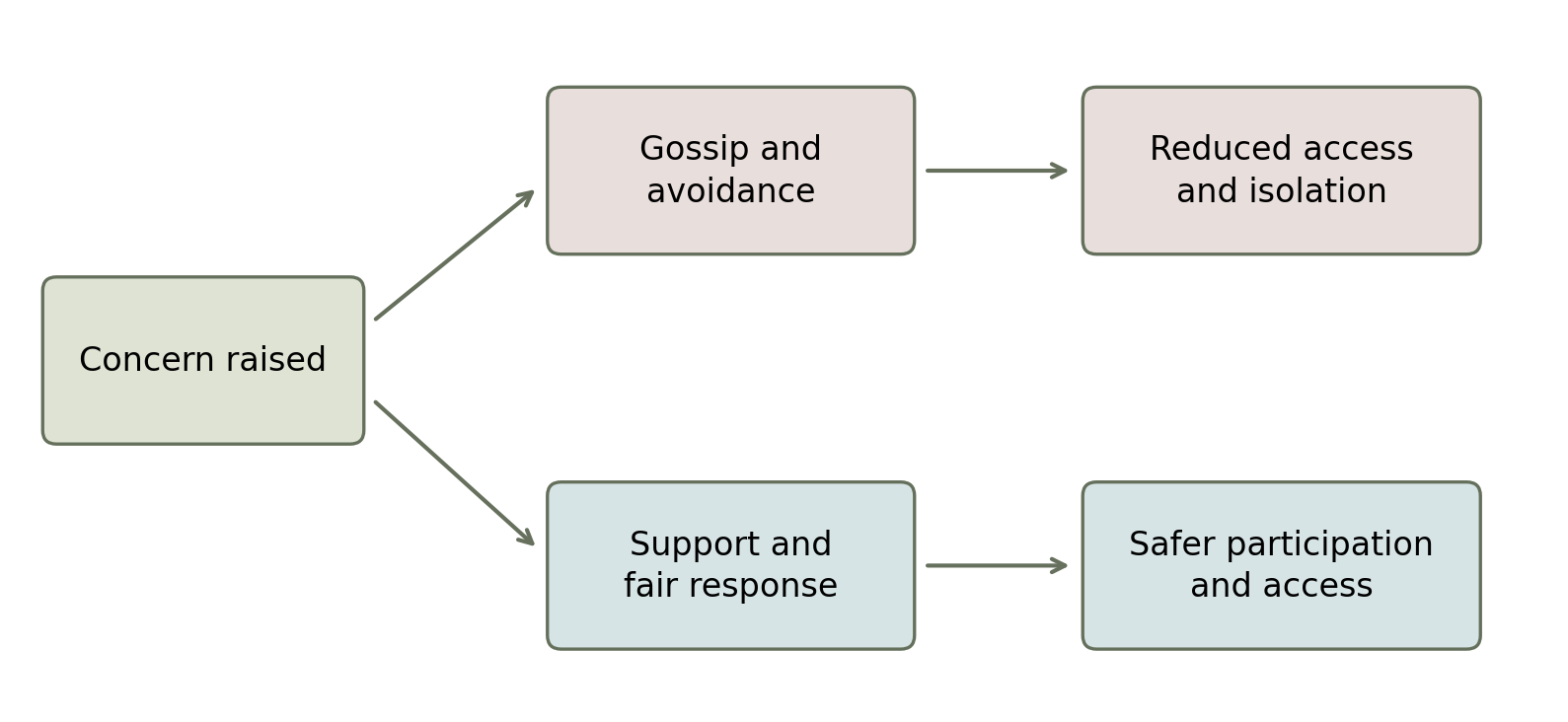
When workplace bullying occurs in the school environment, exclusion may restrict planning and informal knowledge and gossip may weaken social support. Distress may also affect restorative connection at home. Research suggests that teachers’ wellbeing can be affected by pressures at both school and home, although how these pressures interact will differ from person to person (Kollerová et al., 2023; Wathen et al., 2015). Bowen’s Family Systems Theory offers a useful lens for considering how tension spreads through relationships, although schools differ from families. Its concept of triangles describes how tension between two people can draw in a third; in a school, this may help explain patterns of taking sides, gossip and exclusion (The Bowen Center for the Study of the Family, n.d.). From this perspective, bullying can erode a school’s relational culture by weakening trust, dividing colleagues and making silence feel safer than speaking up. The effects can extend beyond the targeted teacher: a review linked witnessing workplace bullying with poorer mental health, job dissatisfaction and intentions to leave, although these associations do not establish causation (Nielsen et al., 2024). A supportive school culture therefore needs room for disagreement and reporting harm, with leaders responsible for fair responses and protection rather than expecting teachers to preserve harmony.
PROSPER(E)
A proposed Wrenvale adaptation: Keep the seven dimensions and add an Evaluation loop around our school actions. Evaluation means checking whether actions guided by PROSPER are making a meaningful difference to teachers’ wellbeing, confidence and working relationships. Staff feedback, follow-up conversations and patterns in reported concerns can help identify what is improving, who may still feel unsupported and what needs to change. Fewer bullying reports alone should not be treated as success, as they may also reflect reluctance to speak up. Findings should inform adjustments to school practices, with clear responsibility and a date for reviewing progress again. Evaluation guidance emphasises context, stakeholder involvement and refinement (Skivington et al., 2021).

